
 Creative Commons License
 Creative Commons License
 Creative Commons License


Nose Ring
(Ancient Americas )
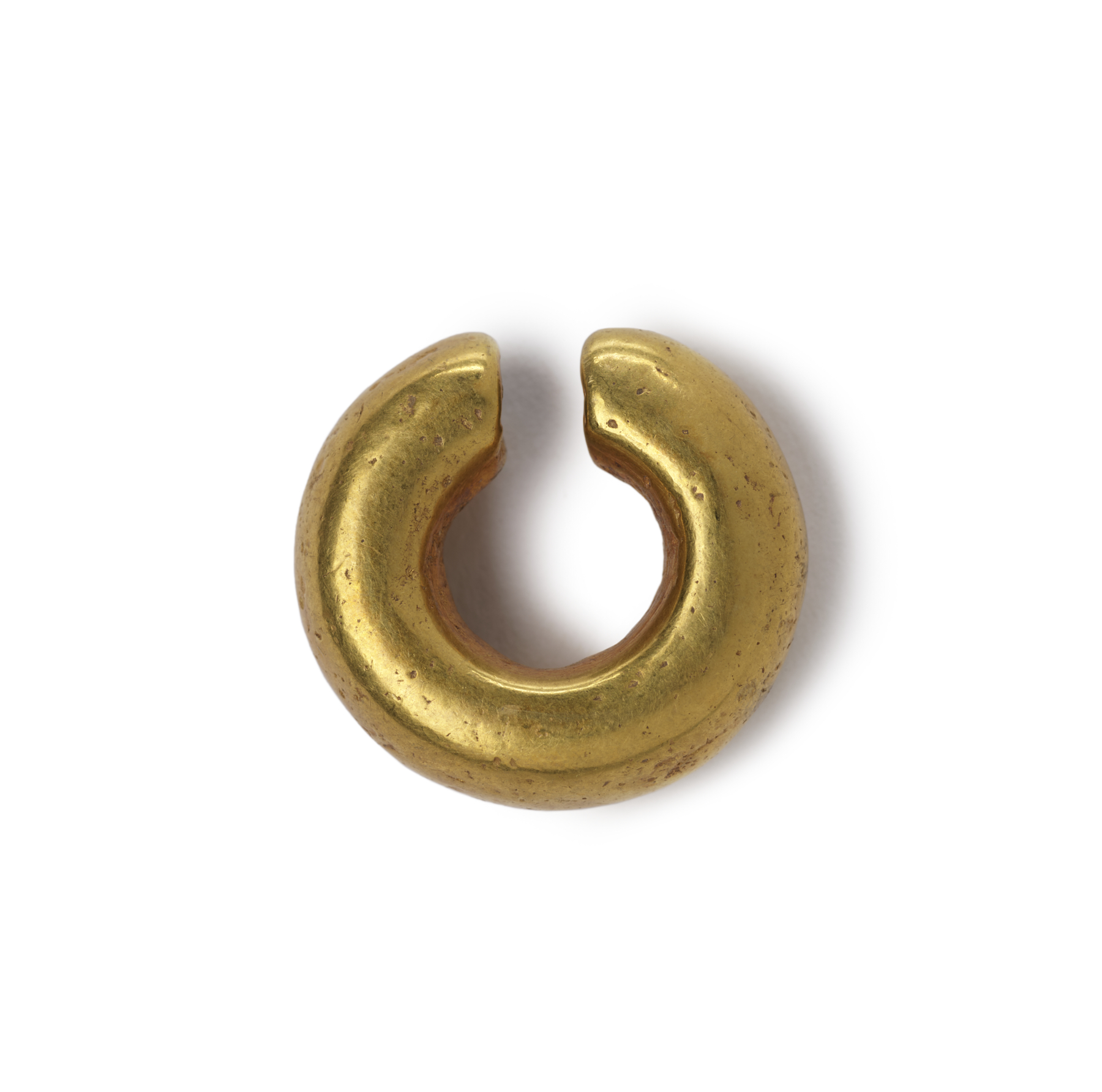
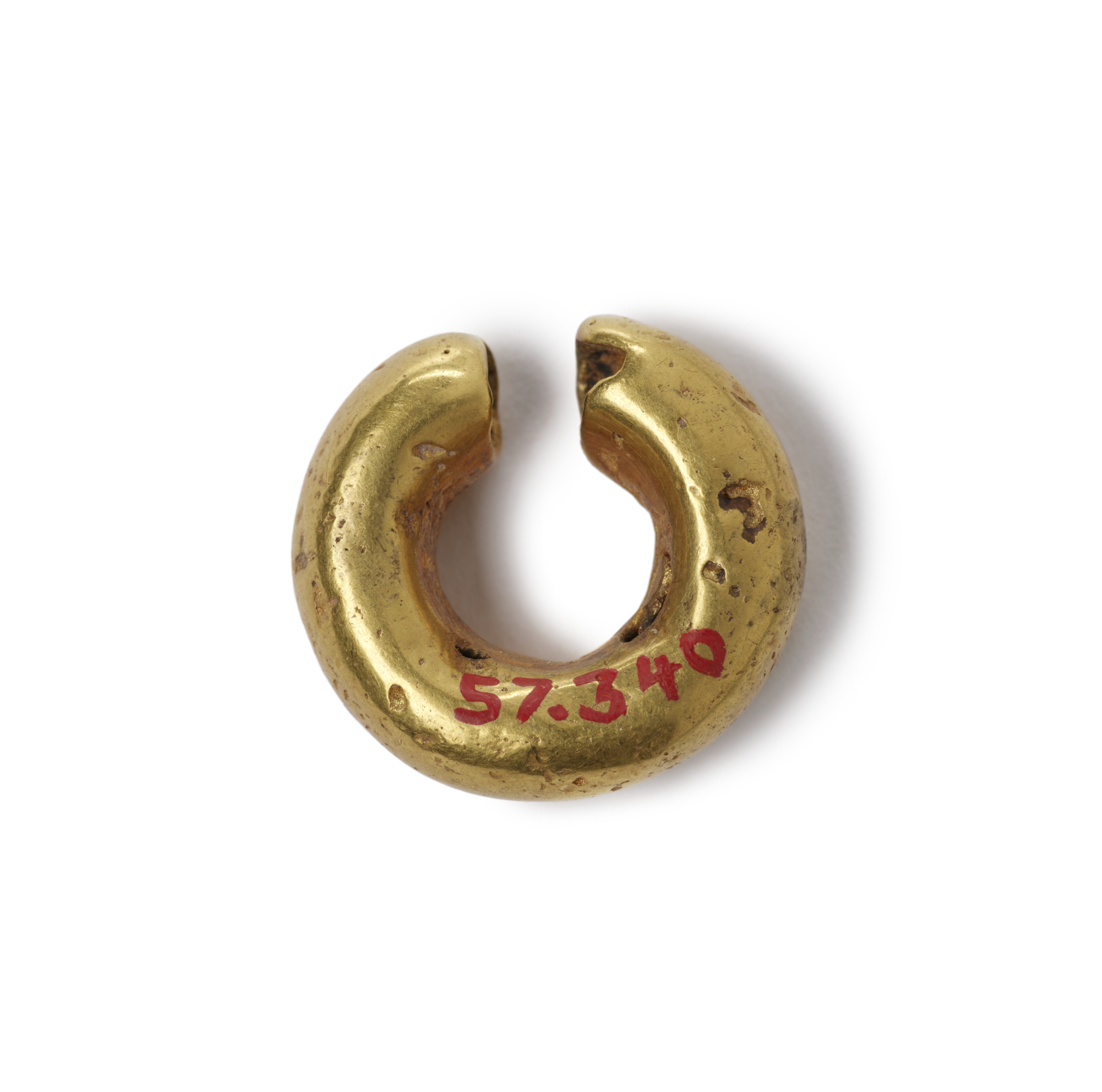
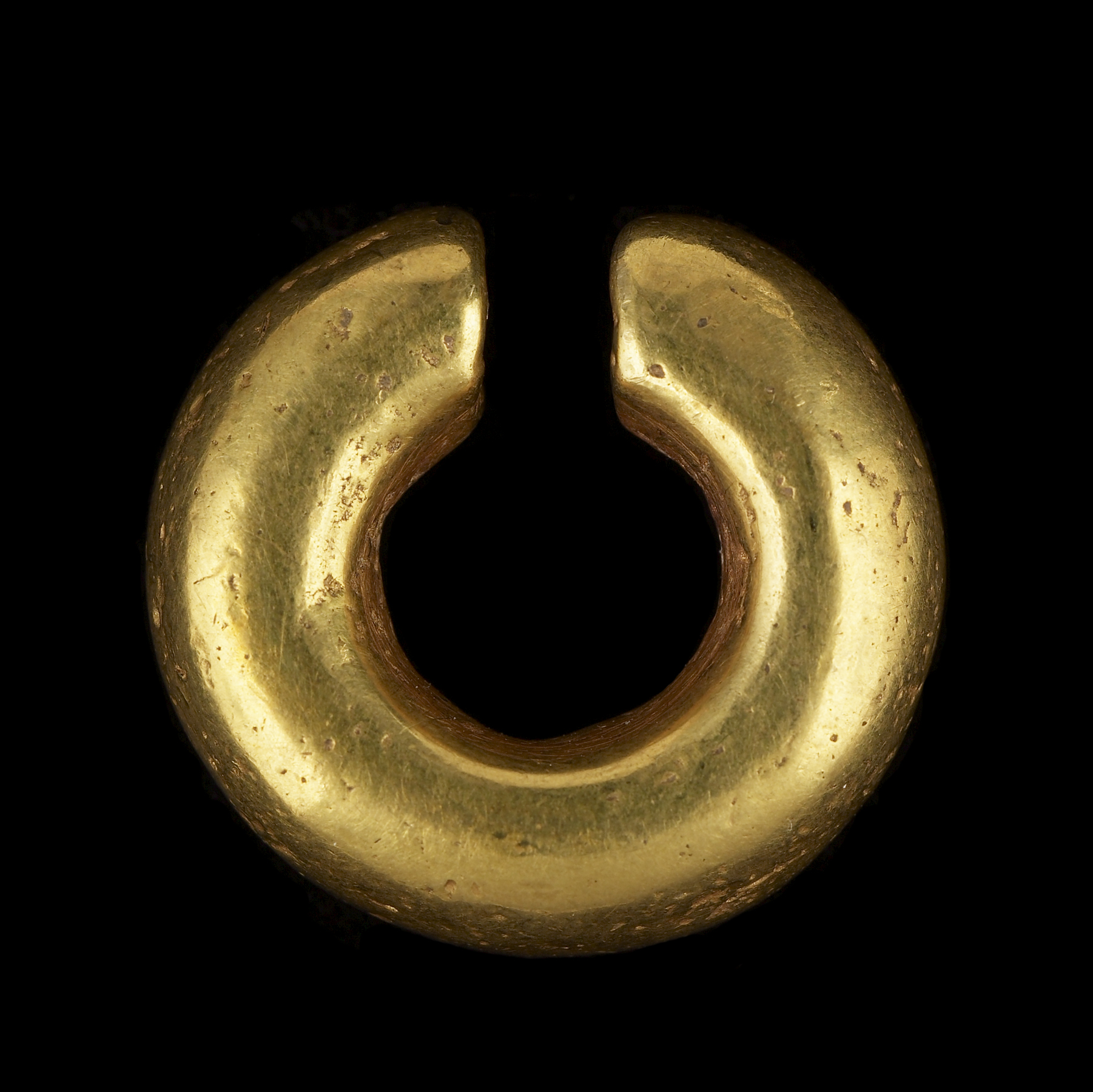
This hollow ring is thought to be a nose ornament, with a small gap in the ring to allow it to be inserted into a stretched septum piercing. Based on contemporaneous artworks featuring figures wearing septum rings, the gap would likely have been pinched closed or concealed within the nostrils when worn. The ends of the ring are open, revealing the hollow interior.
Gold nose rings were among the artifacts brought back to Spain by Columbus. They were a popular form of body ornament and a sign of rank for both men and women in ancient Central and South America.
Provenance
Provenance (from the French provenir, 'to come from/forth') is the chronology of the ownership, custody, or location of a historical object. Learn more about provenance at the Walters.
Tiffany & Co., New York, [date and mode of acquisition unknown]; Henry Walters, Baltimore, 1910, by purchase; Walters Art Museum, 1931, by bequest.
Exhibitions
| 2015 | Gold of the Ancient Americas. The Walters Art Museum, Baltimore. |
Geographies
Panama
(Place of Origin)
Colombia (Place of Origin)
Measurements
H: 11/16 × W: 13/16 × D: 1/4 in. (1.8 × 2 × 0.6 cm)
Credit Line
Acquired by Henry Walters, 1910
Location in Museum
Not on view
Accession Number
In libraries, galleries, museums, and archives, an accession number is a unique identifier assigned to each object in the collection.
In libraries, galleries, museums, and archives, an accession number is a unique identifier assigned to each object in the collection.
57.340