
 Creative Commons License
 Creative Commons License
 Creative Commons License
 Creative Commons License


Reliquary Cross
(Renaissance Europe )
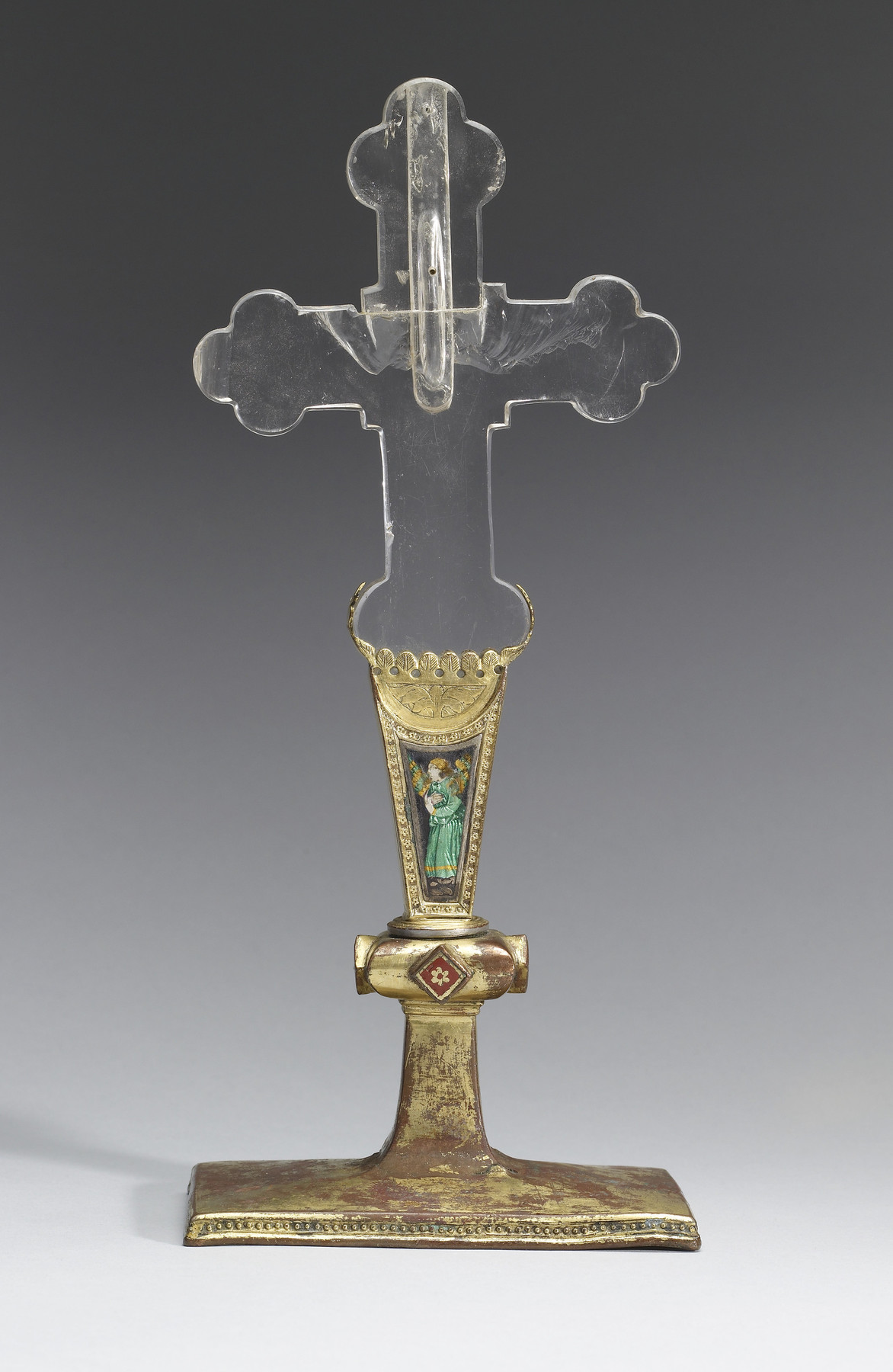
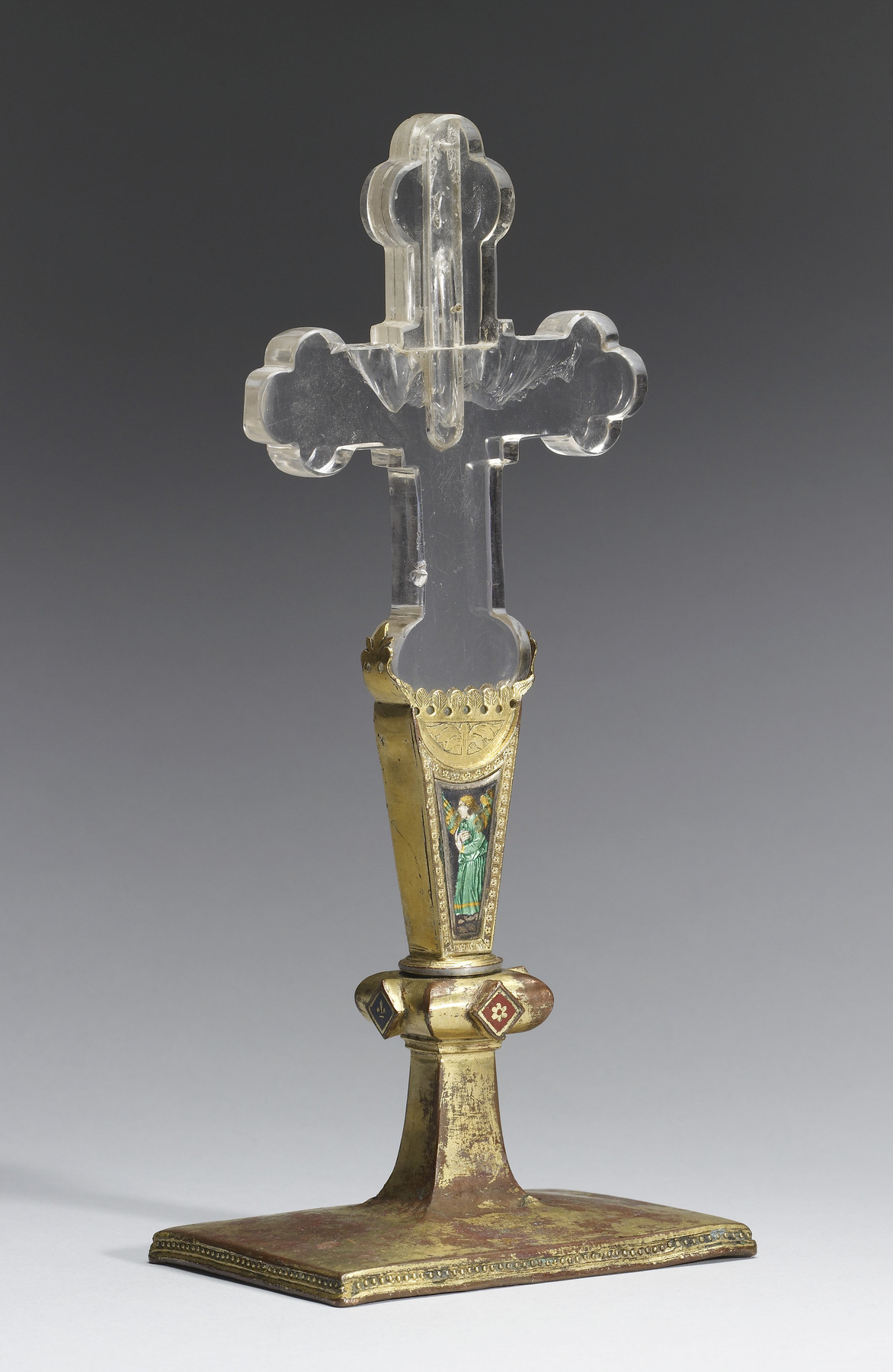
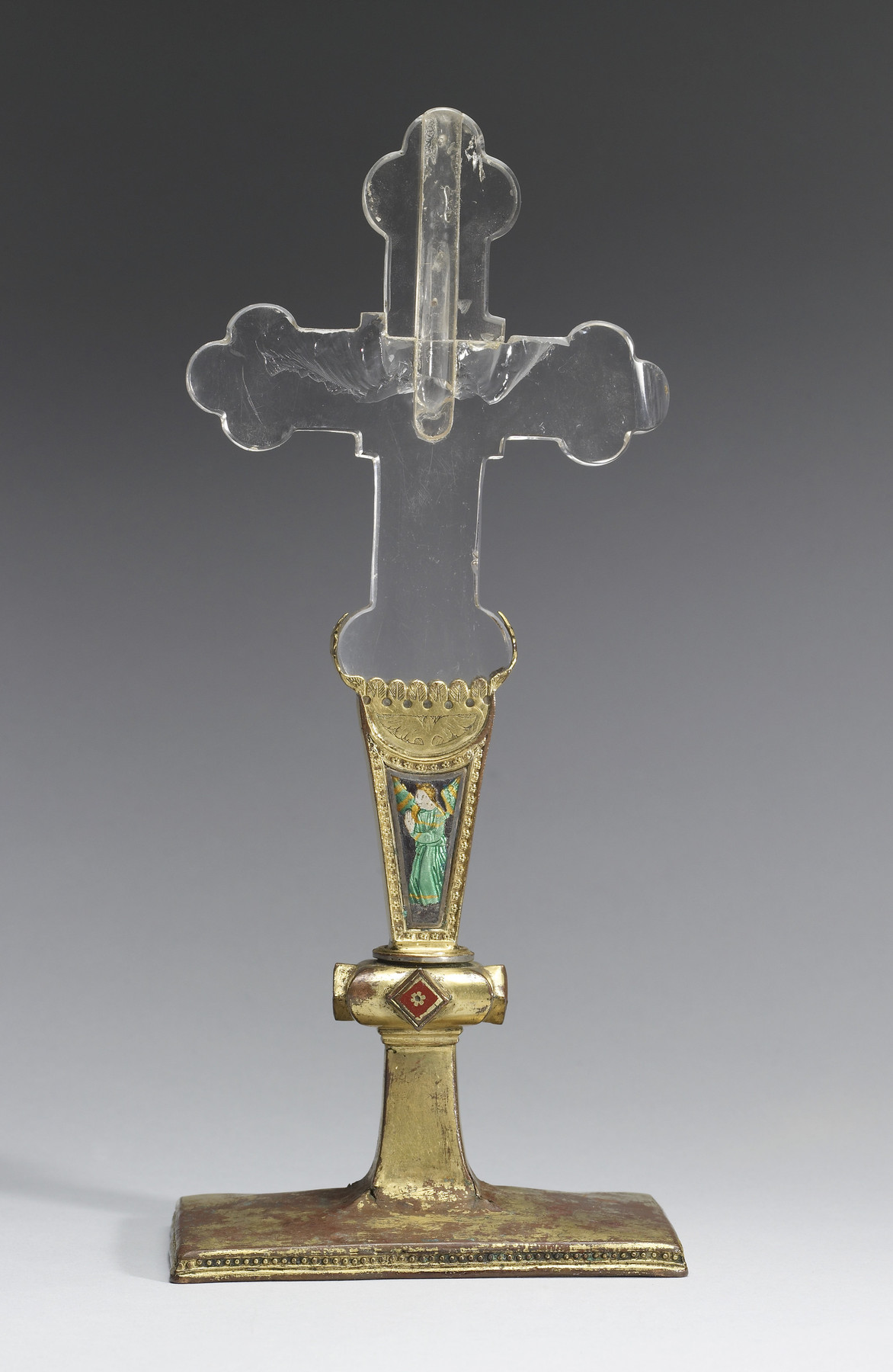
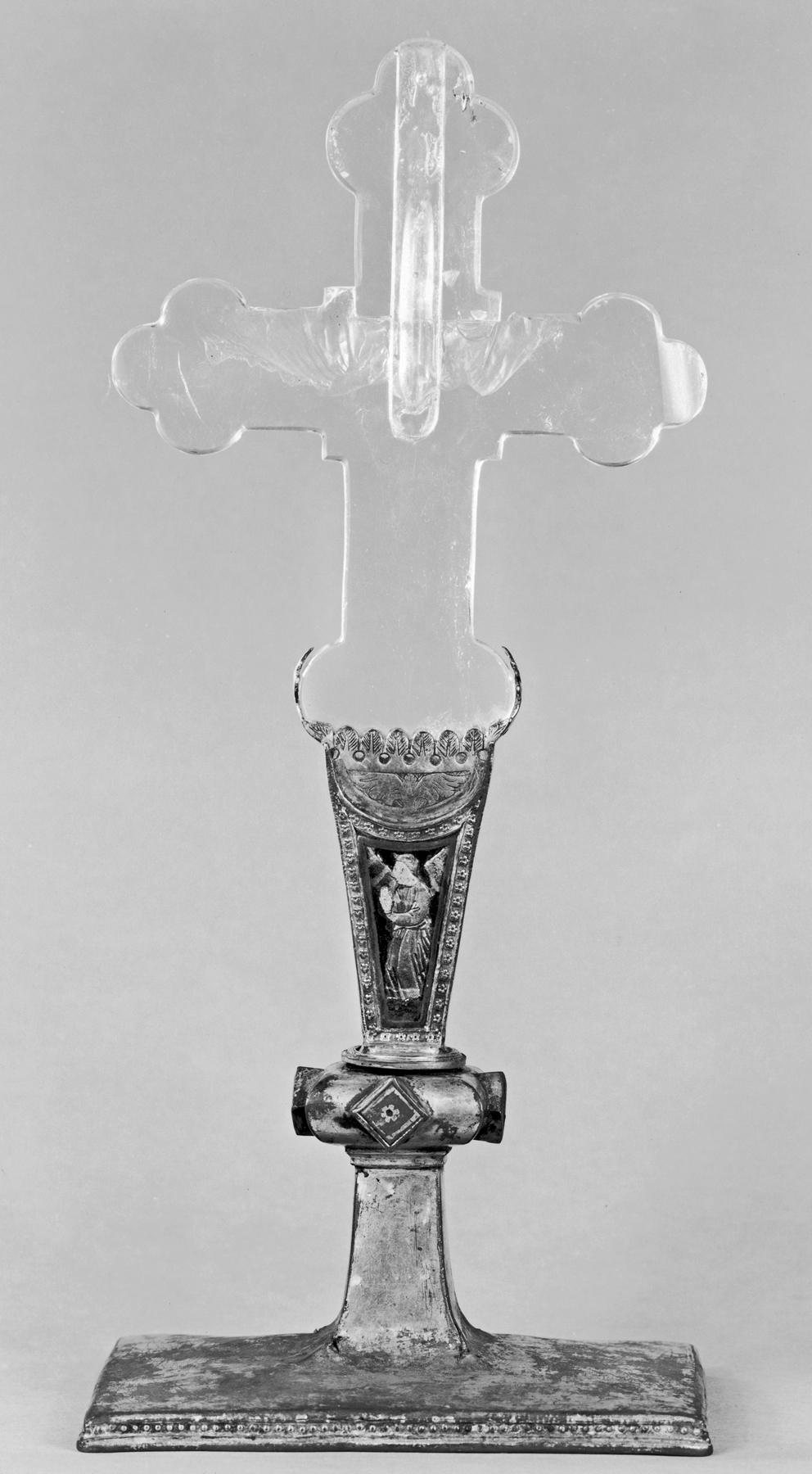
Cut from two pieces of rock crystal, a semiprecious stone prized for its transparency, this cross has an oblong cavity that was believed to have held a relic: a single thorn from Christ’s Crown of Thorns. The two enameled angels depicted on the plaques at the base of the reliquary directed the worshiper's attention to the relic by pointing upward towards the relic chamber. When viewed in flickering candlelight, the cross and the relic would have been permeated with light, symbolically conveying its associations with the divine.
The purity of rock crystal was often associated with Christ. According to Pliny’s Natural History, which was read and copied throughout the Middle Ages and the Renaissance, rock crystal was seen as a permanently solidified form of water. Later Christian theologians built upon this idea, viewing rock crystal as a material that had been transubstantiated, just as the bread and wine are transubstantiated into the body and blood of Christ in the Christian Mass. Medieval and Renaissance commentators also noted the similarities between the words “Christus” (Christ) and “crystallus” (crystal).
Provenance
Provenance (from the French provenir, 'to come from/forth') is the chronology of the ownership, custody, or location of a historical object. Learn more about provenance at the Walters.
Sir Thomas David Gibson Carmichael (Lord Carmichael), before 1902 [mode of acquisition unknown]; Sale, Christie’s, London, May 12, 1902, no. 88; Charles Borradaile, Brighton [date of acquisition unknown], by purchase; George Robinson Harding, London [date of acquisition unknown], by purchase; Henry Walters, Baltimore, 1912, by purchase; Walters Art Museum, 1931, by bequest.
Exhibitions
| 1984-1985 | Reliquaries and Ritual: Medieval Objects of Devotion. The Walters Art Gallery, Baltimore. |
| 1962 | The International Style: The Arts in Europe Around 1400. The Walters Art Gallery, Baltimore. |
Conservation
| Date | Description | Narrative |
|---|---|---|
| 10/2/1962 | Treatment | cleaned; coated |
Geographies
Italy, Venice (?)
(Place of Origin)
Italy, Milan (?) (Place of Origin)
Measurements
H: 10 7/16 x W: 4 1/2 x D: 3 1/8 in. (26.5 x 11.5 x 8 cm)
Credit Line
Acquired by Henry Walters, 1912
Location in Museum
Accession Number
In libraries, galleries, museums, and archives, an accession number is a unique identifier assigned to each object in the collection.
In libraries, galleries, museums, and archives, an accession number is a unique identifier assigned to each object in the collection.
44.303