 Creative Commons License
 Creative Commons License
 Creative Commons License
 Creative Commons License


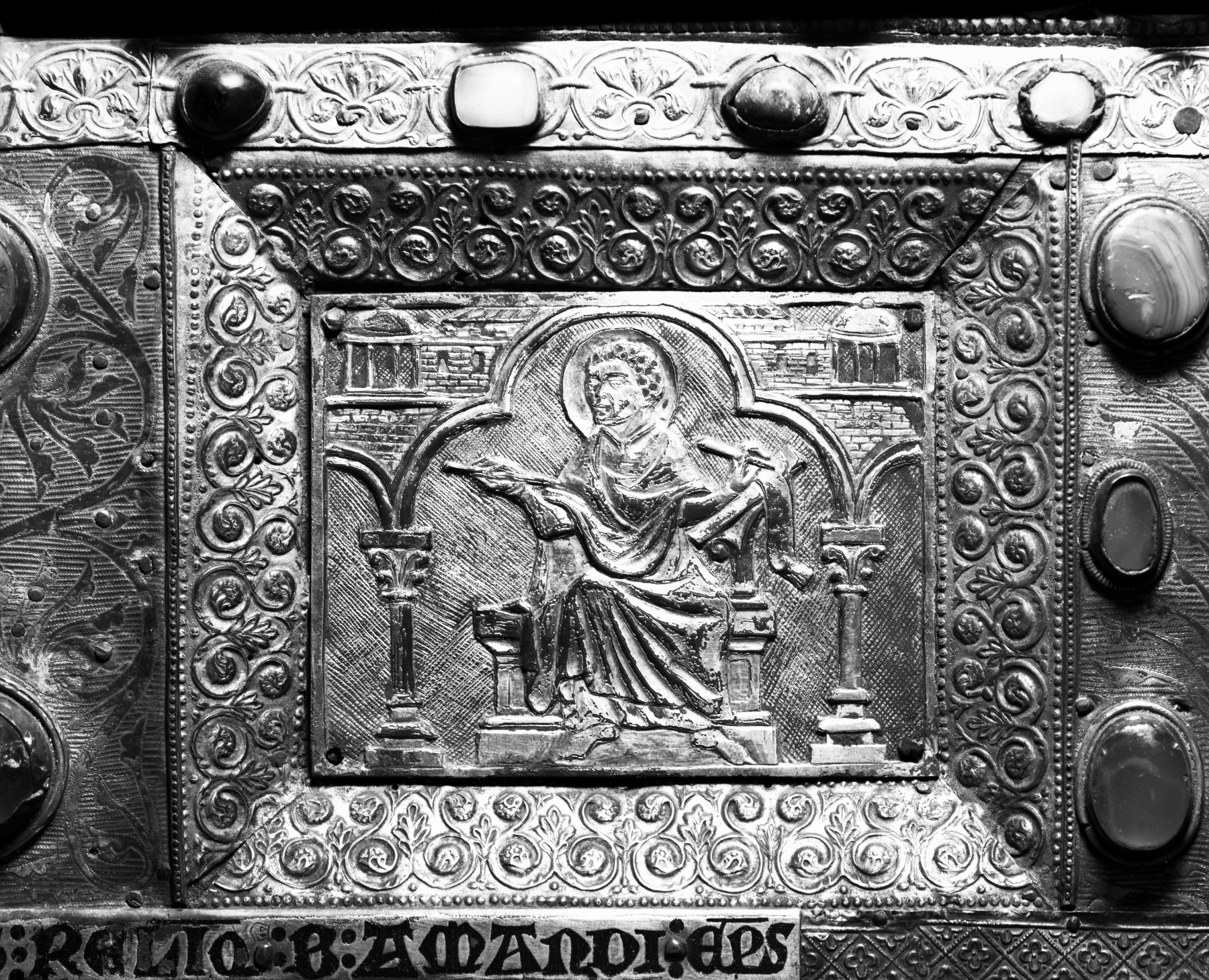
Shrine of Saint Amandus
(Medieval Europe )
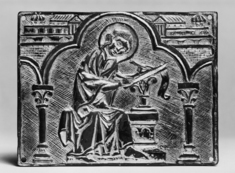
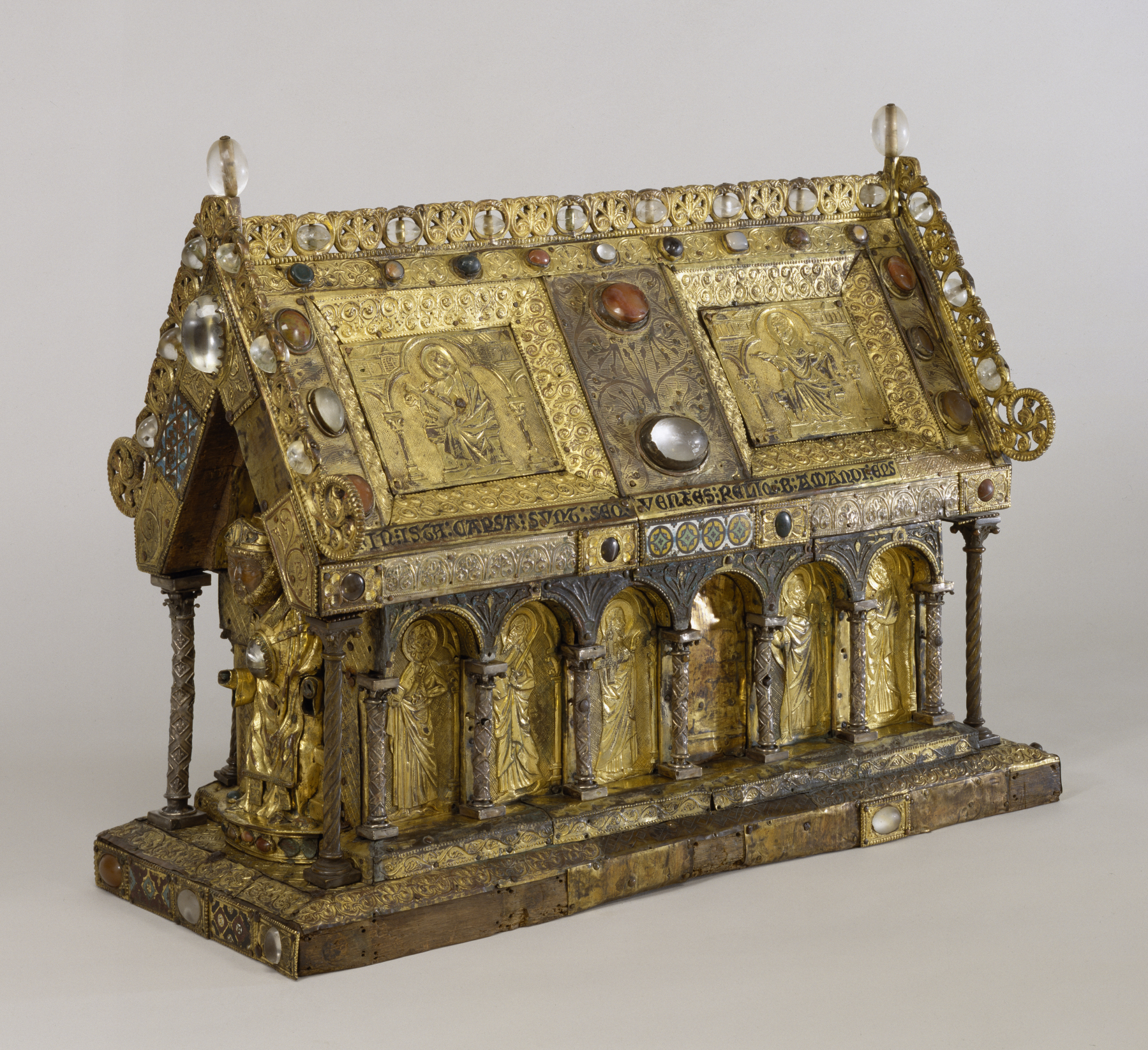
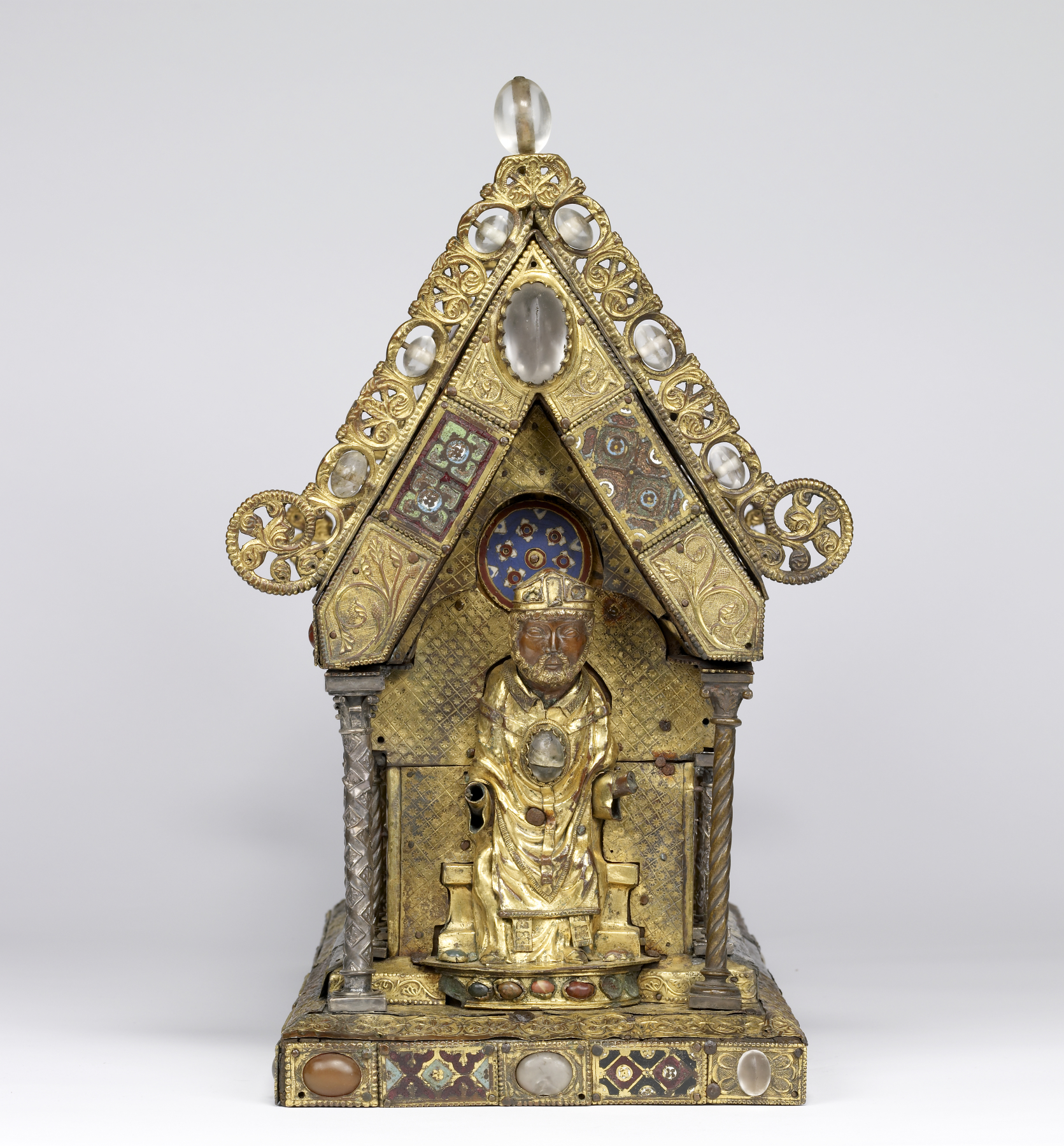
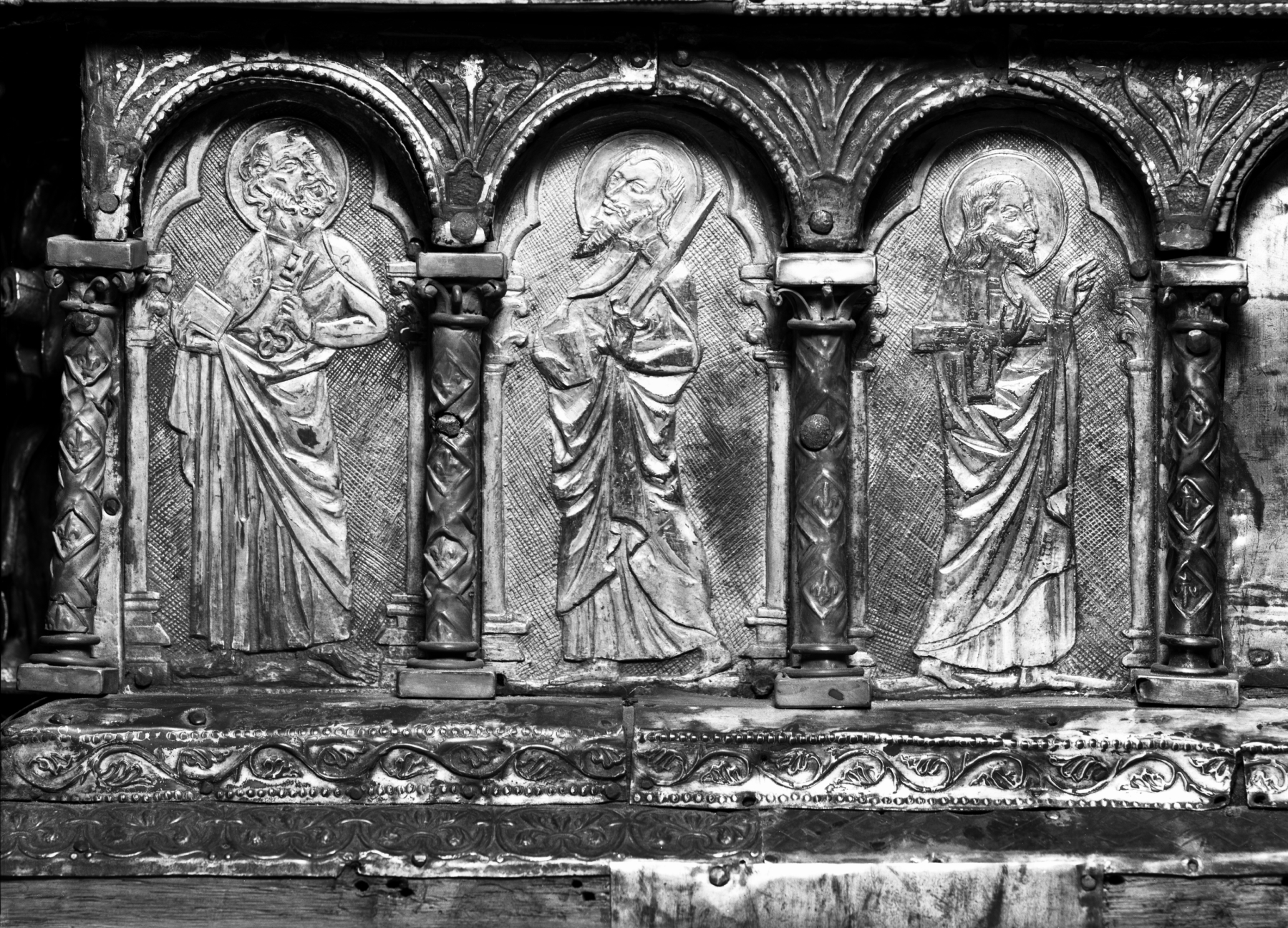
This large, church-shaped shrine once housed the relics of a 7th-century saint who served as a missionary and bishop to the western regions of present-day Belgium. St. Amandus (d. 679) also established a monastery at Elnon, near Tournai (western Belgium), where the monks later commissioned this reliquary to honor his remains. The shrine of St. Amandus, ornamented with silver columns and gilded apostles, was the focus of a strong local cult, visited by pilgrims who came for healing or in thanks for prayers answered. Given its large size and popularity, the shrine was probably placed upon a platform supported by columns behind the main altar for year-round veneration.
Inscription
Provenance
Provenance (from the French provenir, 'to come from/forth') is the chronology of the ownership, custody, or location of a historical object. Learn more about provenance at the Walters.
Brimo de Laroussilhe, Paris [date and mode of acquisition unknown]; Henri Daguerre, Paris [date and mode of acquisition unknown]; Henry Walters, Baltimore, September 3, 1930, by purchase; Walters Art Museum, 1931, by bequest.
Exhibitions
| 2010-2011 | Treasures of Heaven. The Cleveland Museum of Art, Cleveland; The Walters Art Museum, Baltimore; The British Museum, London. |
| 2008-2009 | The Special Dead: A Medieval Reliquary Revealed. The Walters Art Museum, Baltimore. |
| 2002 | The Book of Kings: Art, War, and the Morgan Library's Medieval Picture Bible. The Walters Art Museum, Baltimore; Academy Art Museum, Easton; Princeton University Art Museum, Princeton; The Mitchell Gallery, Annapolis; Williams College Museum of Art, Williamstown. |
| 1984-1985 | Reliquaries and Ritual: Medieval Objects of Devotion. The Walters Art Gallery, Baltimore. |
Conservation
| Date | Description | Narrative |
|---|---|---|
| 2/3/1977 | Treatment | repaired |
Geographies
Belgium, Tournai, Elnone Monastery (Place of Origin)
Measurements
H at top of finials: 19 1/4 x W: 25 1/4 x D: 11 15/16 in. (48.9 x 64.14 x 30.32 cm)
Credit Line
Acquired by Henry Walters, 1930
Location in Museum
Accession Number
In libraries, galleries, museums, and archives, an accession number is a unique identifier assigned to each object in the collection.
In libraries, galleries, museums, and archives, an accession number is a unique identifier assigned to each object in the collection.
53.9