 Creative Commons License

Poem in Honor of the Prophet Muhammad
(Islamic World , Manuscripts and Rare Books, Islamic Manuscripts)
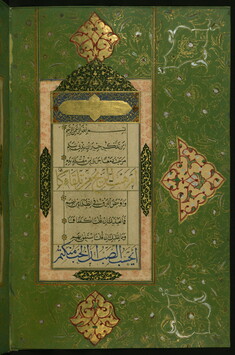
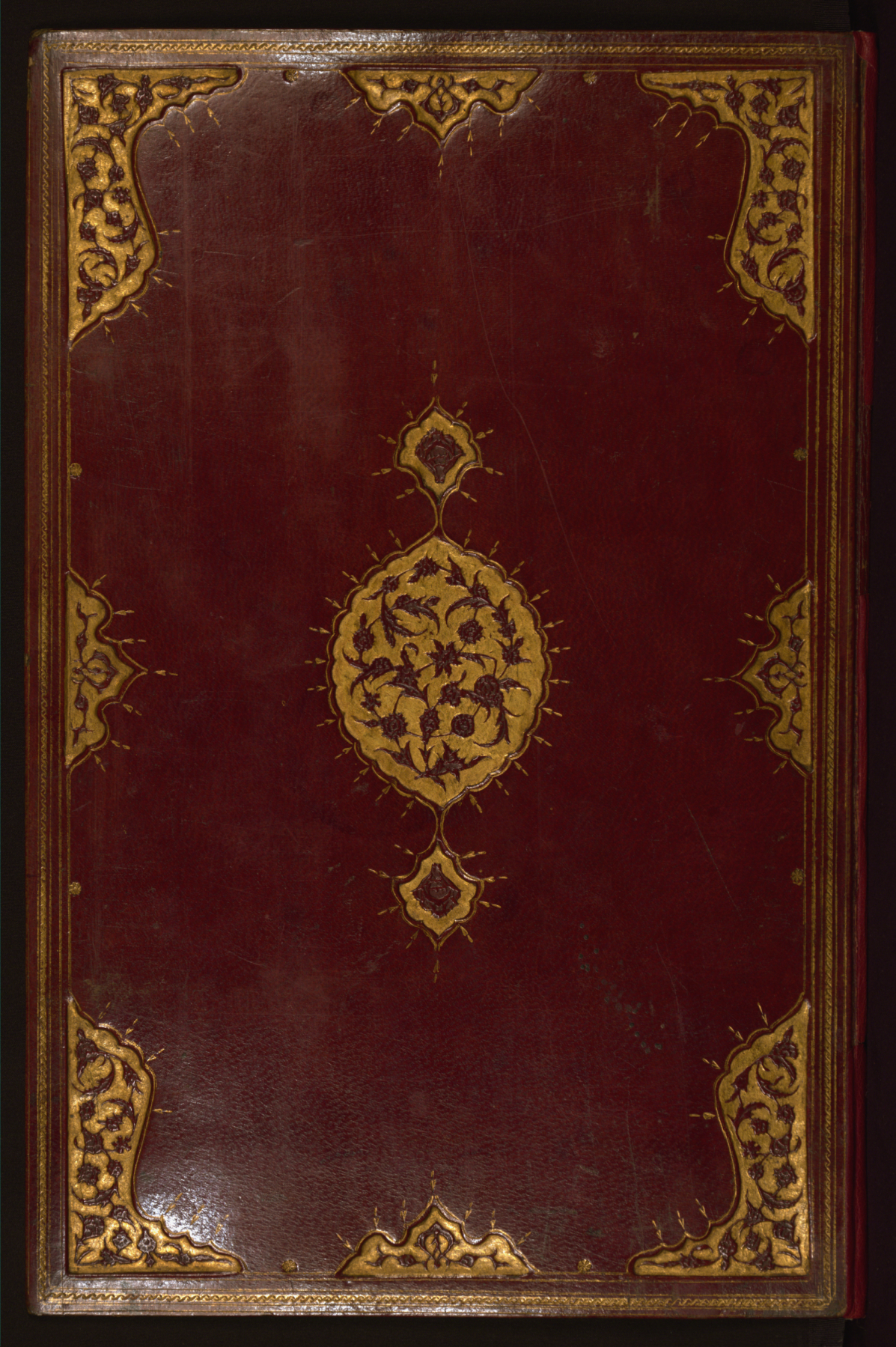
Walters manuscript W.582 is an illuminated copy of the famous poem in honor of the Prophet Muhammad, popularly known as Qasidat al-burdah (Poem of the mantle), composed by Sharaf al-Din Muhammad al-Busiri (died 694 AH/AD 1294). The text was written in a variety of scripts in the 11th century AH/AD 17th. According to the colophon, written in Riqa' script, it was executed by Habib Allah ibn Dust Muhammad al-Khwarizmi. The text of the poem begins on fol. 5b. Each page has borders of various colors with illuminated floral and geometric motifs. The borders and brown leather binding date to the 12th century AH/AD 18th.
Provenance
Provenance (from the French provenir, 'to come from/forth') is the chronology of the ownership, custody, or location of a historical object. Learn more about provenance at the Walters.
[Two erased large seals on folio 1a]; Henry Walters, Baltimore [date and mode of acquistion unknown]; Walters Art Museum, 1931, by bequest.
Exhibitions
| 2012 | Paradise Imagined: Images of the Garden in the Islamic and Christian World. The Walters Art Museum, Baltimore. |
| 2010 | Poetry and Prayer: Islamic Manuscripts from the Walters Art Museum. The Walters Art Museum, Baltimore. |
| 1997-1998 | Covered in Meaning: Book Bindings from The Walters. The Walters Art Gallery, Baltimore. |
Geographies
Turkey
(Place of Origin)
Iran (Place of Origin)
Measurements
Folio H: 10 1/16 x W: 6 1/2 in. (25.5 x 16.5 cm)
Credit Line
Acquired by Henry Walters
Location in Museum
Not on view
Accession Number
In libraries, galleries, museums, and archives, an accession number is a unique identifier assigned to each object in the collection.
In libraries, galleries, museums, and archives, an accession number is a unique identifier assigned to each object in the collection.
W.582
Do you have additional information?
Related Objects
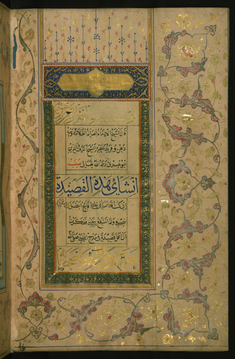
Incipit Page with Illuminated Headpiece

Illuminated Explicit Page with Colophon