The Walters Art Museum

Online Collection

Explore the Art Collection keyboard_arrow_down close
  • Explore By...
  • Category
  • Date
  • Medium
  • Creator
  • Places
  • Museum Locations
The Walters Art Museum walters-logo-white
  • Calendar
  • Art
  • Shop
  • Give Now
  • Visit
    • Plan Your Visit
    • Hours
    • Directions & Parking
    • Food, Drink, & Shop
    • Free Admission
    • Tours
    • Accessibility
    • Visitor Promise
  • Experience
    • Virtual Museum
    • Exhibitions & Installations
    • Programs & Events
    • Collections
    • Buildings
    • Baltimore
  • Support
    • Support the Walters
    • Corporate Partnerships
    • Institutional Funders
    • Evening at the Walters
    • Volunteers
  • About
    • Mission & Vision
    • Leadership
    • Strategic Plan
    • Land Acknowledgment
    • Research
    • Policies
Image for St. Martin and the Beggar
tooltip-icon Creative Commons License

Creative Commons Zero

Download Image Zoom
Image for St. Martin and the Beggar
tooltip-icon Creative Commons License

Creative Commons Zero

Download Image Zoom
  • arrow_forward_ios
  • arrow_forward_ios
St. Martin and the Beggar Thumbnail

St. Martin and the Beggar

Workshop of Nardon Pénicaud (French, 1470-1542/3) (Workshop)
1st half 16th century (Renaissance)
painted enamel on copper
(Renaissance Europe )

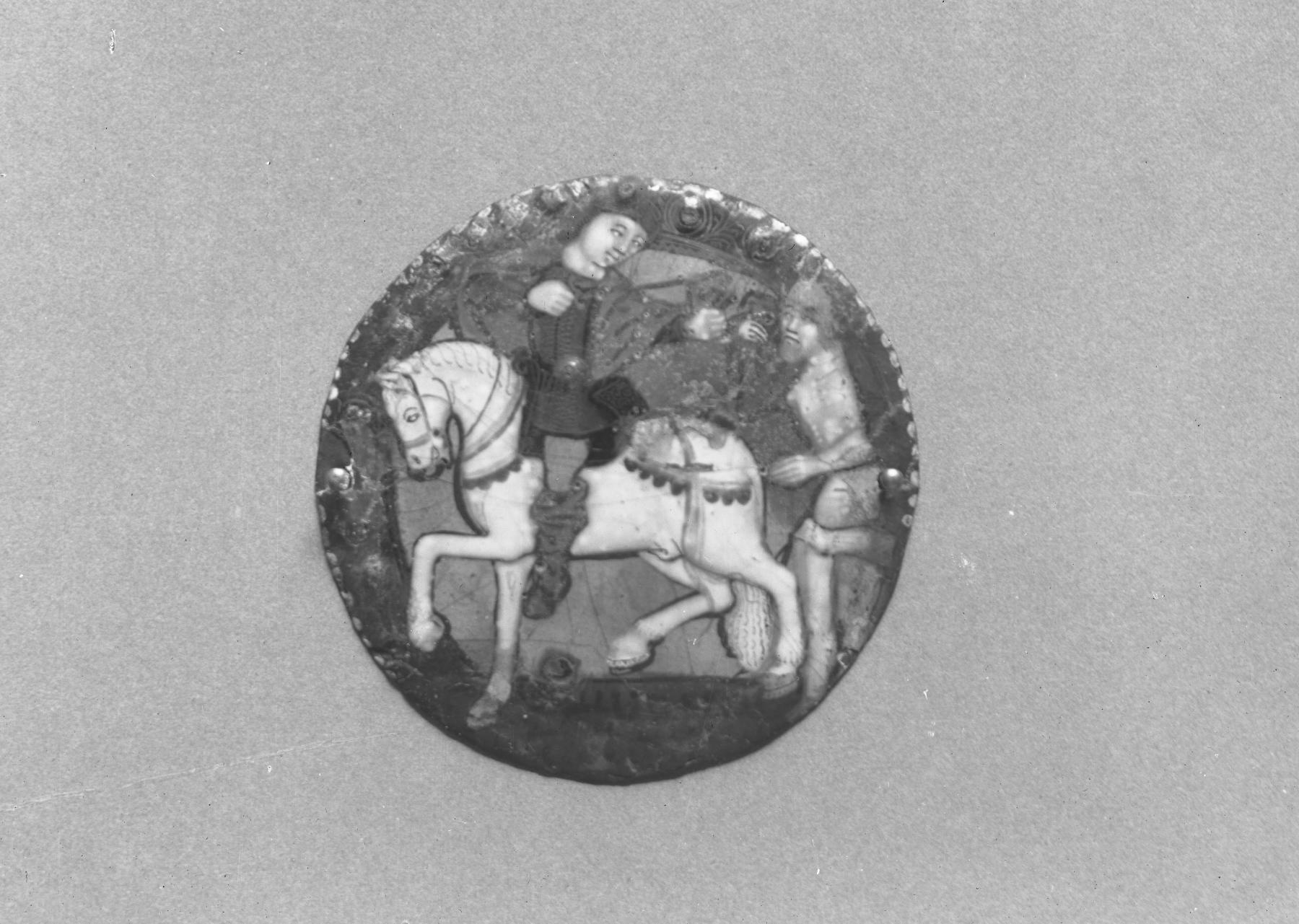
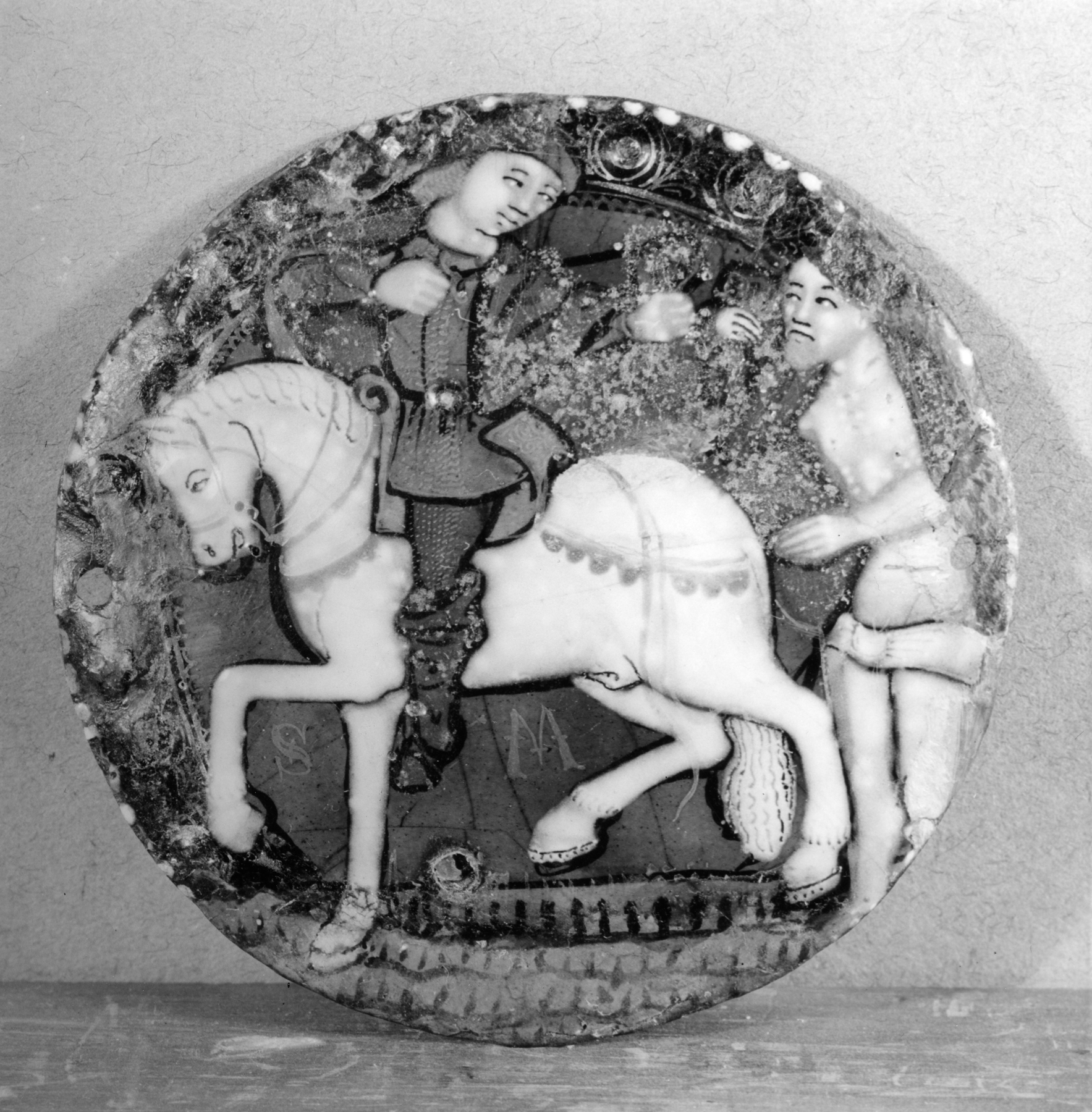
The hat badge depicts St. Martin and the beggar, represented according to the usual iconographic type: the youthful saint, riding a horse, turns in his saddle towards the beggar and cuts his cloak in two to share it with him. Very often the beggar was represented as a cripple in rags with a wooden leg. Here he is naked, except for a loin-cloth.

The border is studded with "jewels" in raised enamels over foil spangles, with gilt scrolls between, and an outer line of drops of white enamel. Inscribed in faded gilding in the blue ground between the legs of the horse: SM (Sanctus Martinus).

Inscription

[Transcription] SM; [Transliteration] S(aint) M(artin)

Provenance
Provenance (from the French provenir, 'to come from/forth') is the chronology of the ownership, custody, or location of a historical object. Learn more about provenance at the Walters.

Sale, Galleria Sangiorgi, Rome, April 21, 1902, lot 340; Henry Walters, Baltimore, 1902, by purchase; Walters Art Museum, 1931, by bequest.

Conservation

Date Description Narrative
10/14/1940 Treatment coated; cleaned
4/26/1961 Treatment cleaned; loss compensation
1/7/1963 Treatment cleaned; loss compensation; coated
1/22/1980 Examination examined for condition
4/21/2003 Examination examined for condition
Share
  • social-item
  • social-item
  • social-item

Geographies

France, Limoges (Place of Origin)

Measurements

Diam: 2 1/2 in. (6.4 cm)

Credit Line

Acquired by Henry Walters, 1902

Location in Museum

Not on view

Accession Number

In libraries, galleries, museums, and archives, an accession number is a unique identifier assigned to each object in the collection.

44.350

Do you have additional information?

Notify the curator

Hours

  • Wednesday—Sunday: 10 a.m.—5 p.m.
  • Thursday: 1–8 p.m.
  • Monday—Tuesday: Closed

Location

600 N. Charles St.
Baltimore, MD
21201

Phone

410-547-9000

  • Visit
  • Experience
  • What's On
  • About
  • Shop
  • Support The Walters
copyright

The Walters Art Museum

  • Accessibility
  • Privacy Policy/Terms of Use
  • Copyright Info
  • facebook
  • instagram
  • twitter
modal close
Image for
tooltip-icon Creative Commons License

Tooltip description to define this term for visitors to the website.

zoom-btn zoom-btn preview-download
Image for
tooltip-icon Creative Commons License

Tooltip description to define this term for visitors to the website.

zoom-btn zoom-btn preview-download
  • arrow_forward_ios
  • arrow_forward_ios